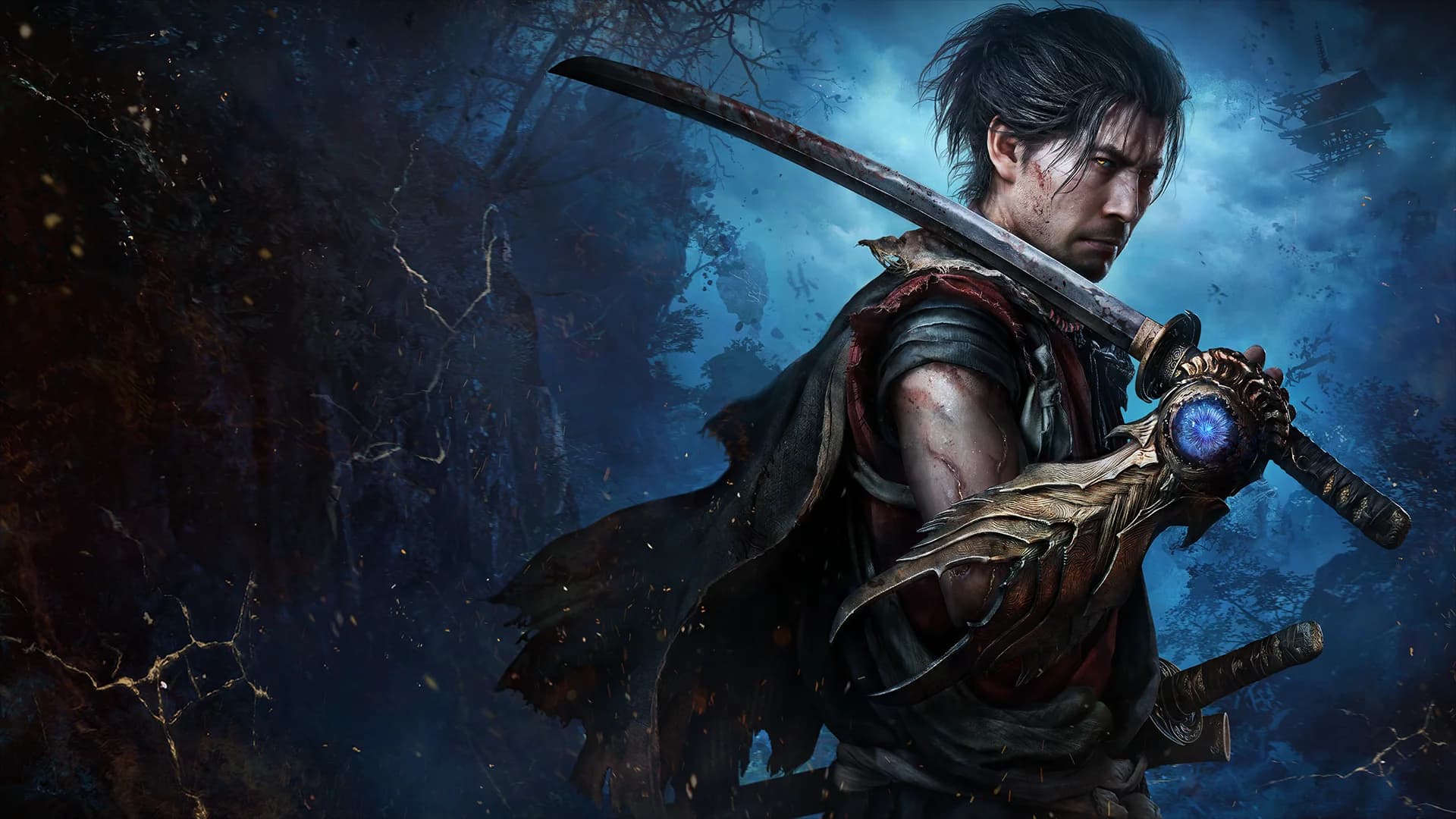
Combat is the clearest repeated strength
Across the collected reviews, sword combat receives the most consistent praise. Parries, deflects, Issen counters, stamina control, and readable animation give each exchange a deliberate rhythm. The system rewards proactive defense because a correct answer creates offense. It does not ask the player to wait behind a permanent guard.
Musashi uses one core katana with faster one-handed and stronger two-handed attacks, supported by Oni Armaments and environmental tools. This narrower focus lets the combat build around mastery rather than constant inventory replacement. Reviewers repeatedly describe the result as precise and expressive. That praise is still opinion, but it appears across more than one source.
Bosses put the system under pressure
Boss encounters are another repeated highlight in the review material. They ask the player to distinguish parry, deflect, dodge, Issen, and stamina-break opportunities instead of using one response for every attack. A successful fight develops from reading the animation and controlling the opening. The best moments make defense feel like an active attack plan.
Difficulty can rise well above the opening demo according to reviewers. That increase means a boss may require repeated attempts and careful resource use, especially on Action difficulty. Story difficulty provides a lower-barrier option in the collected material. The presence of an easier mode does not make every later encounter equally simple.
Character animation supports the action
Reviewers praise Musashi's facial performance and the broader character animation. His face and mannerisms are modeled after actor Toshiro Mifune, giving the protagonist a recognizable screen presence. The collected opinions connect that performance with a more character-driven story. Expressive reactions help the supernatural conflict retain human personality.
The verified supporting cast includes Sasaki Ganryu, Shizuka, Ono no Takamura, and Izumo no Okuni. Ganryu supplies a personal sword rivalry, while Shizuka's relationship with Musashi gives the Oni Gauntlet more than a silent equipment role. Takamura and Okuni connect the wandering swordsman to Kyoto's defense. The local evidence does not support a complete final roster.
The story uses a focused premise
The game takes place in a dark-fantasy version of Edo-period Kyoto. Genma corruption and spreading malice threaten the city, while Musashi is drawn into the crisis after receiving the soul-absorbing Oni Gauntlet. The narrative uses historical figures as loose fiction rather than a literal biography. It combines horror, action spectacle, rivalry, and moments of humor.
Collected reviews describe the story as more character-driven than plot-heavy. Musashi's resistance to power he did not earn and his developing relationship with Shizuka give the journey its emotional line. Ganryu provides a recurring rival within the larger supernatural conflict. This page stays spoiler-light and does not invent an ending summary.
Kyoto is the main structural trade-off
The most common caveat concerns the recurring Kyoto hub and its side activity. Review discussions describe some malice-clearing, errands, environmental objectives, or repeated exploration as slower than the strongest boss and story sequences. This does not mean the entire hub is empty or that every optional task is poor. It identifies the area where pacing criticism appears most often.
The world is stage-based with wider sections rather than fully open world. Eastern Kyoto can support side quests, resources, optional encounters, and backtracking, while temples, forests, mountains, and the Imperial Palace provide other destinations. That wheel-and-spoke or wide-linear structure gives exploration without a seamless sandbox. Repetition becomes more noticeable when the player pursues a broader completion route.
Playtime depends on the chosen route
About 20 hours is the most useful planning figure for the main story. Collected playthroughs range from roughly 15-20 hours for focused runs to 30-32 hours and about 39 hours for players with different exploration or difficulty habits. These totals use different definitions of finish. They should not be averaged into a fake precise score.
The collected Platinum roadmap estimates 60-70 hours because it includes cleanup, collectibles, upgrades, boss objectives, and Carnage. That route is not representative of every first playthrough. Review value judgments often depend on which of these goals the reviewer pursued. Readers should compare the opinion with the actual route taken.
The game is not best defined as a Soulslike
The cited director classification describes Way of the Sword as a character-action game rather than a Soulslike. Comparisons remain understandable because it uses demanding bosses, precise defensive timing, and stamina-focused encounters. The difference is that combat encourages learned counterplay and aggressive conversion of defense into openings. Its stage-based structure and soul economy also follow their own design.
Not being classified as a Soulslike does not promise low difficulty. Reviewers can reasonably use the comparison to communicate feel while keeping the developer's category clear. The best review language explains the similarity and difference rather than treating the label as a verdict. Genre vocabulary should help the buyer understand play, not settle an argument.
Platform reports need their own conditions
PS5 review material discusses performance and quality presentation, while Switch 2 captions praise that port in the reviewers' test conditions. PC review material describes a stable experience on a high-end system. None of those observations guarantees the same result on every platform, patch, or hardware setup. Technical claims require named conditions.
The game is available on PS5, Xbox Series X|S, Switch 2, Steam, and Epic Games Store in the collected launch sources. Platform choice should consider current price, controls, storage, performance testing, and preferred format. A positive review of one port cannot fill missing evidence for another. Keep product availability and measured behavior separate.
A balanced conclusion
Way of the Sword is best described as a focused single-player sword-action game with demanding timing, strong boss encounters, and expressive character work. Its most consistent weakness in the collected opinions is pacing around repeated Kyoto side activity. Players who value deliberate parry and counter systems are likely to care most about its strengths. Players seeking a seamless open world should understand the stage-based structure before buying.
No reliable single review score is present in the local collection, and this guide does not invent one. Scores also hide why reviewers disagree about length, difficulty, and hub pacing. The useful answer is the pattern of praise and criticism, with each opinion kept attributed. That gives the reader evidence to decide without pretending one number is universal.