The direct answer
Onimusha: Way of the Sword is not an open-world game. The collected developer, interview, and review material describes it as a stage-based, wide-linear adventure. Players move through distinct locations and story objectives, while some stages provide room for exploration, optional encounters, side quests, and backtracking.
The important qualification is Eastern Kyoto. It is described as a larger recurring hub or semi-open area where the player can wander, speak with characters, gather resources, and complete local activities. A large hub can feel open without turning every location into one seamless sandbox, so both parts of the description matter.
What wide-linear means here
Wide-linear is a useful middle category between a narrow corridor and a fully open world. The main story still gives the adventure an authored route and sends the player through distinct stages. Within parts of that route, the player can step away from the most direct objective, investigate branches, find resources, and return to previously visited spaces.
This structure lets the developers control pacing and encounter order while retaining exploration. A stage can introduce a combat idea, create a focused story sequence, and then open into a broader area with optional paths. The player has meaningful room to look around, but does not receive one borderless map that can be crossed in any direction from the beginning.
Review material in the captured source set uses a wheel-and-spoke comparison. Eastern Kyoto acts as a point the story can revisit, while other locations branch into their own missions and environments. That description is more precise than using open world as a general synonym for any game with a large playable space.
Eastern Kyoto as a semi-open hub
Eastern Kyoto is the strongest reason some footage can appear open-world at first glance. The area supports free-form wandering within its boundaries, conversations with NPCs, side quests, resource collection, and optional encounters. Returning to the hub can reveal new local goals or make earlier spaces relevant again.
The source material also describes malice affecting parts of Kyoto. Progress can involve destroying corrupted plants, closing rifts, or completing other local objectives that clear sections and make more of the area usable. These activities give the hub its own rhythm beyond simply walking from one story marker to the next.
None of those features require a seamless global map. Hubs have long supported exploration and side content inside otherwise stage-based games. The accurate claim is that Way of the Sword contains semi-open spaces, especially Eastern Kyoto, within a controlled wider adventure.
Separate destinations remain separate
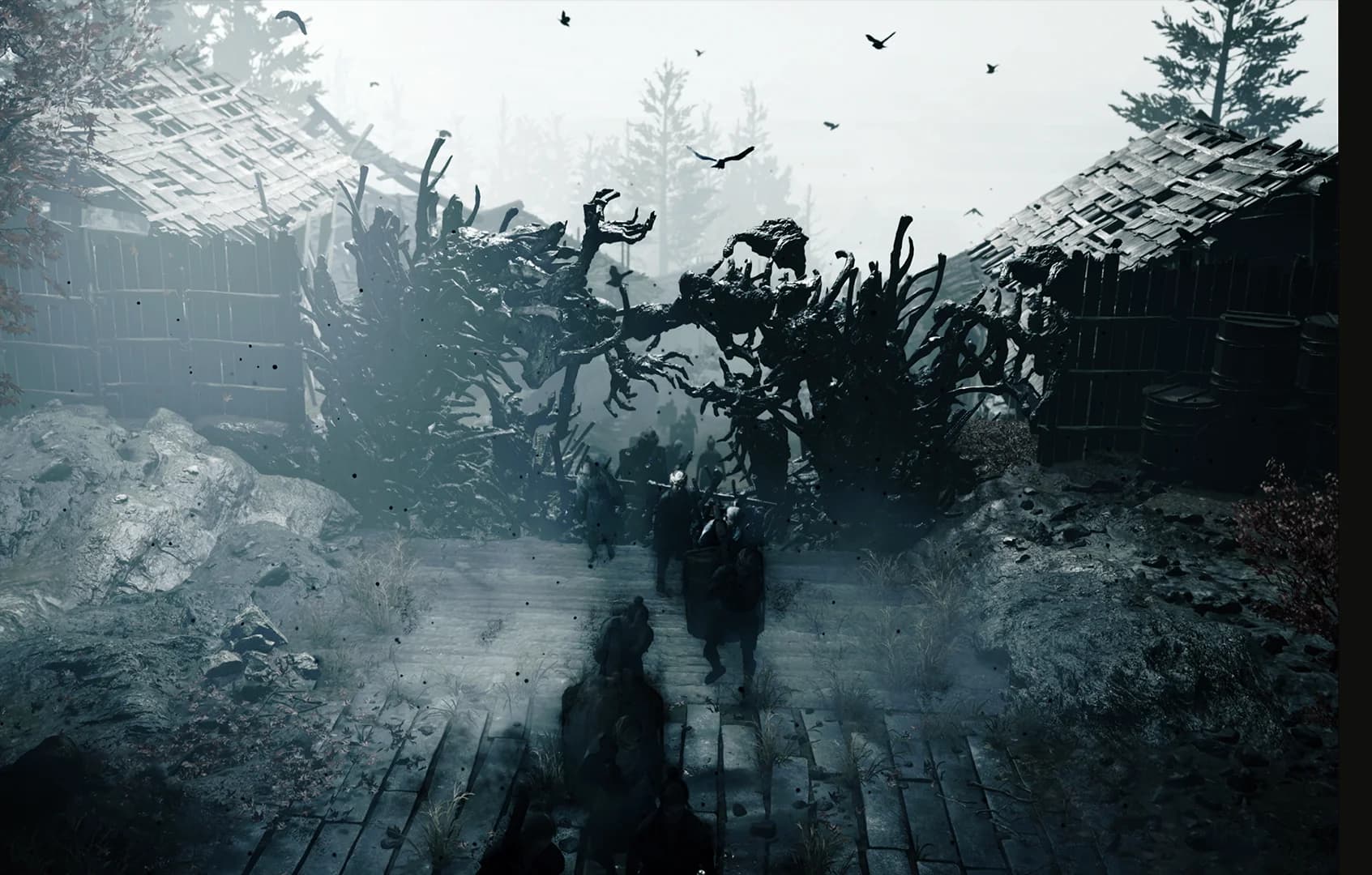
The adventure visits more than city streets. The collected material mentions temples, mountains, forests, and the Imperial Palace among its destinations. Each setting can offer a different mood, route shape, enemy mix, and story purpose without becoming a connected open-world region.
Variety can sometimes create the impression of a huge continuous map when shown across trailers. Editing moves instantly between dramatic landscapes, while the game itself can use stage transitions and authored mission progression. A list of many locations is therefore evidence of environmental range, not proof of an open world.
This matters when setting expectations. Players should anticipate a journey through several crafted destinations rather than a sandbox where every visible landmark can be approached from a universal overworld. The tradeoff favors controlled encounters, directed narrative beats, and locations built around a particular chapter.
Exploration, side quests, and backtracking
Stage-based does not mean that the player only walks forward through one corridor. The collected reviews and captioned footage support side quests, hidden or optional content, resource gathering, and backtracking. Branches and revisited areas can reward attention even when the main objective points in a clear direction.
Optional encounters are part of that exploration value. A player who searches beyond the critical route may find a fight, a useful resource, or a local task that a more direct run would miss. The semi-open hub gives these activities a natural home without requiring every story stage to operate the same way.
Backtracking also changes how spaces are read. A blocked or corrupted area can become relevant after a later objective, and a familiar street can host a new activity on return. This is structured exploration: the game controls when and why a space changes, while the player still decides how thoroughly to investigate it.
What the game is not promising
The open-world label usually carries expectations about a seamless map, broad route freedom, numerous independent regions, and a large amount of player-directed travel. The current evidence does not support applying that package of expectations to Way of the Sword. Its main progression remains tied to stages and story objectives.
It is equally misleading to describe the game as completely linear. That wording loses the scale and role of Eastern Kyoto, the side quests, the local malice-clearing activities, and the opportunity to backtrack. A useful guide should avoid both extremes because each hides a meaningful part of the structure.
The best purchase expectation is a focused action adventure with broad areas rather than a sandbox. Players who prefer authored pacing still have optional routes to explore, while players who require a fully open map should not infer one from the size of the Kyoto footage.
How world structure supports combat
Wide-linear spaces can place combat encounters within a deliberate sequence. A narrow route can teach one enemy pattern, a broader section can combine threats from several directions, and an optional branch can hold a tougher fight for players who want it. The level structure therefore works with the timing-based sword system rather than existing only as scenery.
The Kyoto hub can also create pauses between more directed stages. Resource gathering, conversations, and side activities give the player reasons to reassess equipment or practice before returning to the main route. That rhythm is different from continuously roaming a world map in search of the next region.
Because the game contains multiple structures, screenshots alone can be deceptive. A broad plaza proves that the plaza is broad; it does not establish how the complete campaign is organized. Developer descriptions and the relationship between stages provide the stronger evidence.
Source snapshot and limits
This answer uses the local source snapshot captured on September 4, 2026. The evidence includes a Game Informer discussion of the wide-linear distinction, an Analog Stick Gaming review, related community reporting, and captioned videos that describe Eastern Kyoto and show malice-clearing objectives. Together they support a stage-based game with semi-open areas.
The structure should be described at the campaign level, not inferred from one level or trailer shot. Future updates might add activities or adjust access within a location, but that would not automatically transform the base campaign into an open world. Until official material says otherwise, wide-linear, stage-based, and semi-open hub are the most evidence-aligned terms.